
Our Current Collection
-
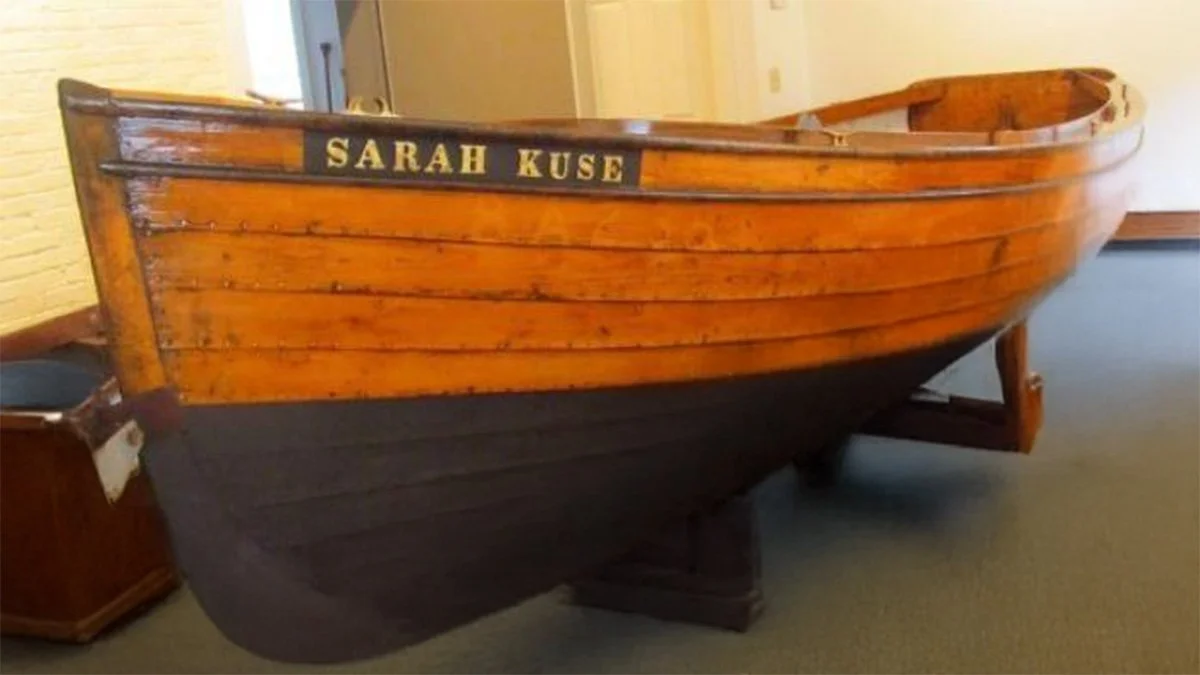
Sarah Kuse
In 1926 this custom-made boat was given to William J. (Bill) Clapper, Jr. of Wolcott, NY, upon his graduation from Syracuse University. It is an 18’ gaff-rigged cat-boat, part of the Leisure Hour line of boats. She was sailed out of Port Bay, north of Wolcott, on Lake Ontario.
It is said that Bill Clapper and his wife Nettie often sailed Sarah Kuse formally dressed: he in a suit and tie and she in a fancy dress and hat, with a parasol. That scene was vividly remembered by the neighboring Pasco family who rescued the Sarah Kuse from near ruin, and Phil Pasco brought her to Cambridge, NY.
She was then given to Bob Clay, also from the Cambridge area, with the stipulation that she be fully restored and put on display, which is why she is now here. Bob, with support from his wife Carol, spent over 1200 hours lovingly and skillfully bringing the Sarah Kuse back to life as an outstanding example of wooden boat building in Skaneateles. She is now back home thanks to the generosity of the Clays and the Pascos.
-
Our Antique Boat Collection
Since the early 19th century, pleasure craft have plied the waters of Skaneateles Lake, driven by oar, sail, steam, diesel fuel and gasoline.
In the 1840s, sails became a common sight on the lake, with the Julia and the Jilt, the Leslie and the Isabella. In the 1850s they were joined by a dozen more sailboats, including the Laura, for 80 years the Queen of Skaneateles Lake.
The Historical Society Museum has an abundant collection of antique boats that have traversed Skaneateles Lake, on display for all to see.
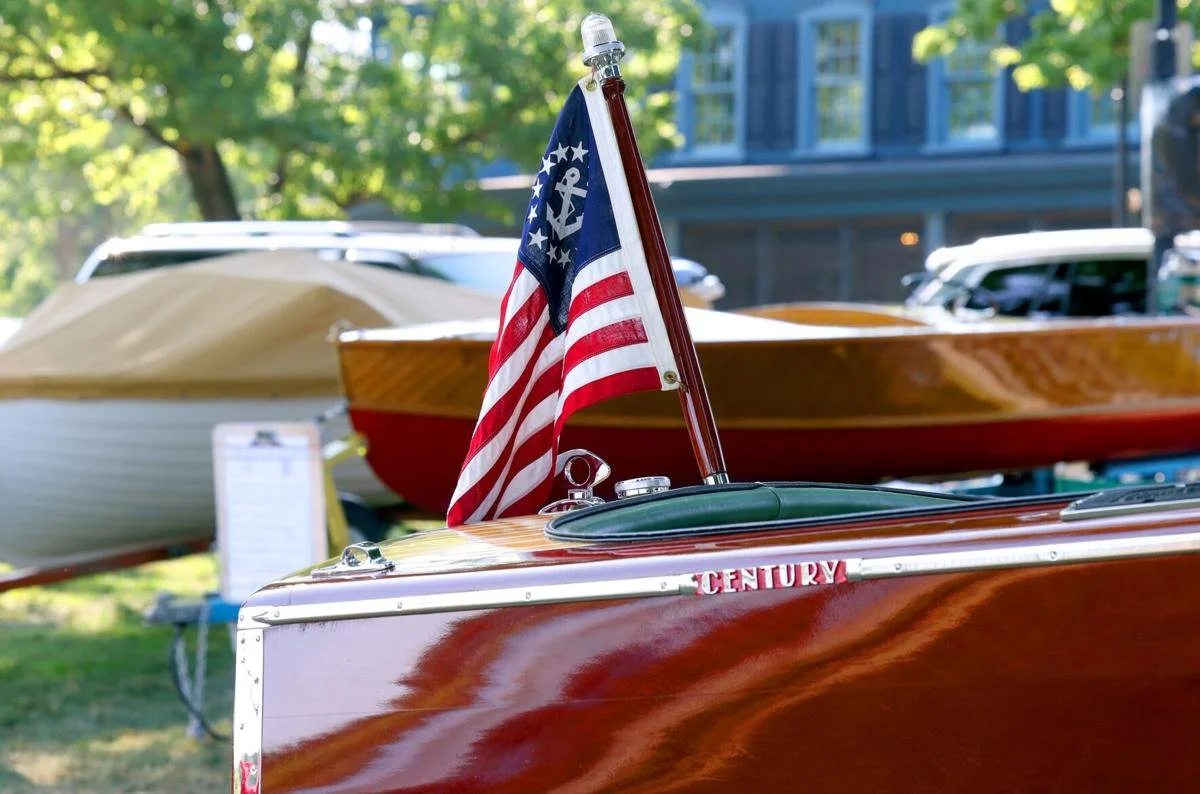
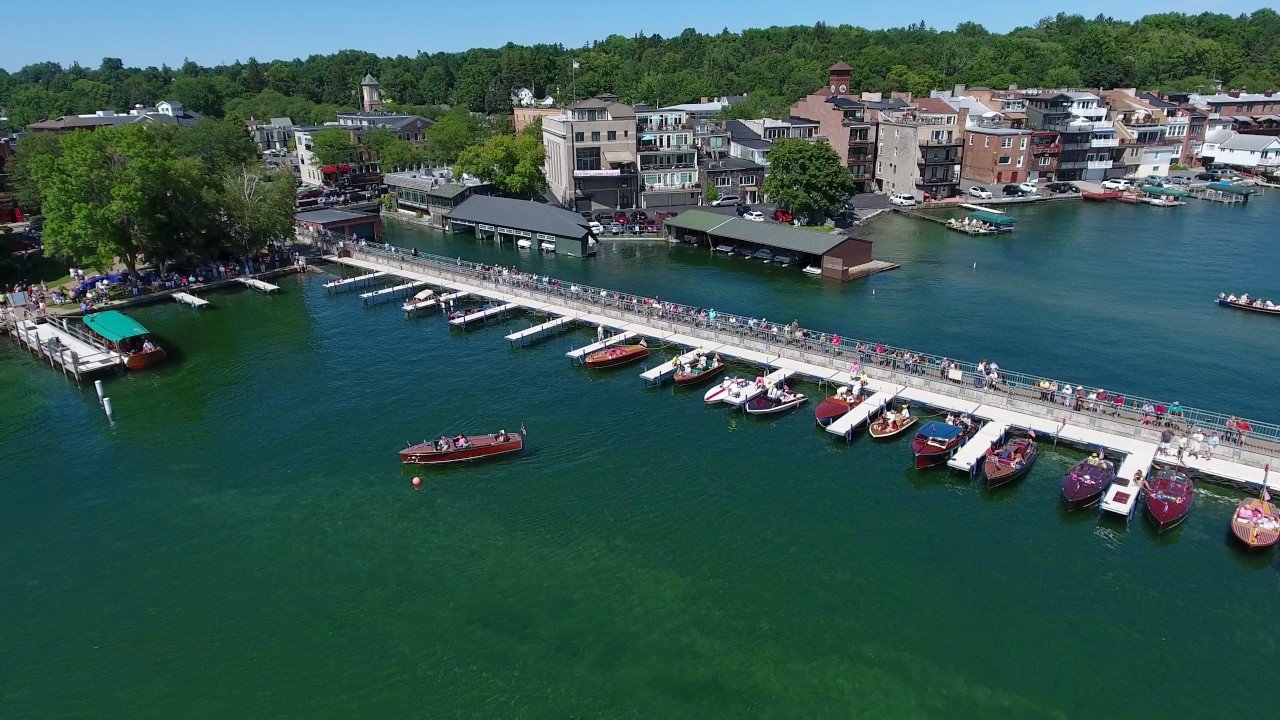
Every summer, the town of Skaneateles showcases local antiques boats in its annual Antique Boat show. This years, will be held the weekend of July 25th-27th located in Thayer park on Skaneateles Lake.
-
Historical Wing
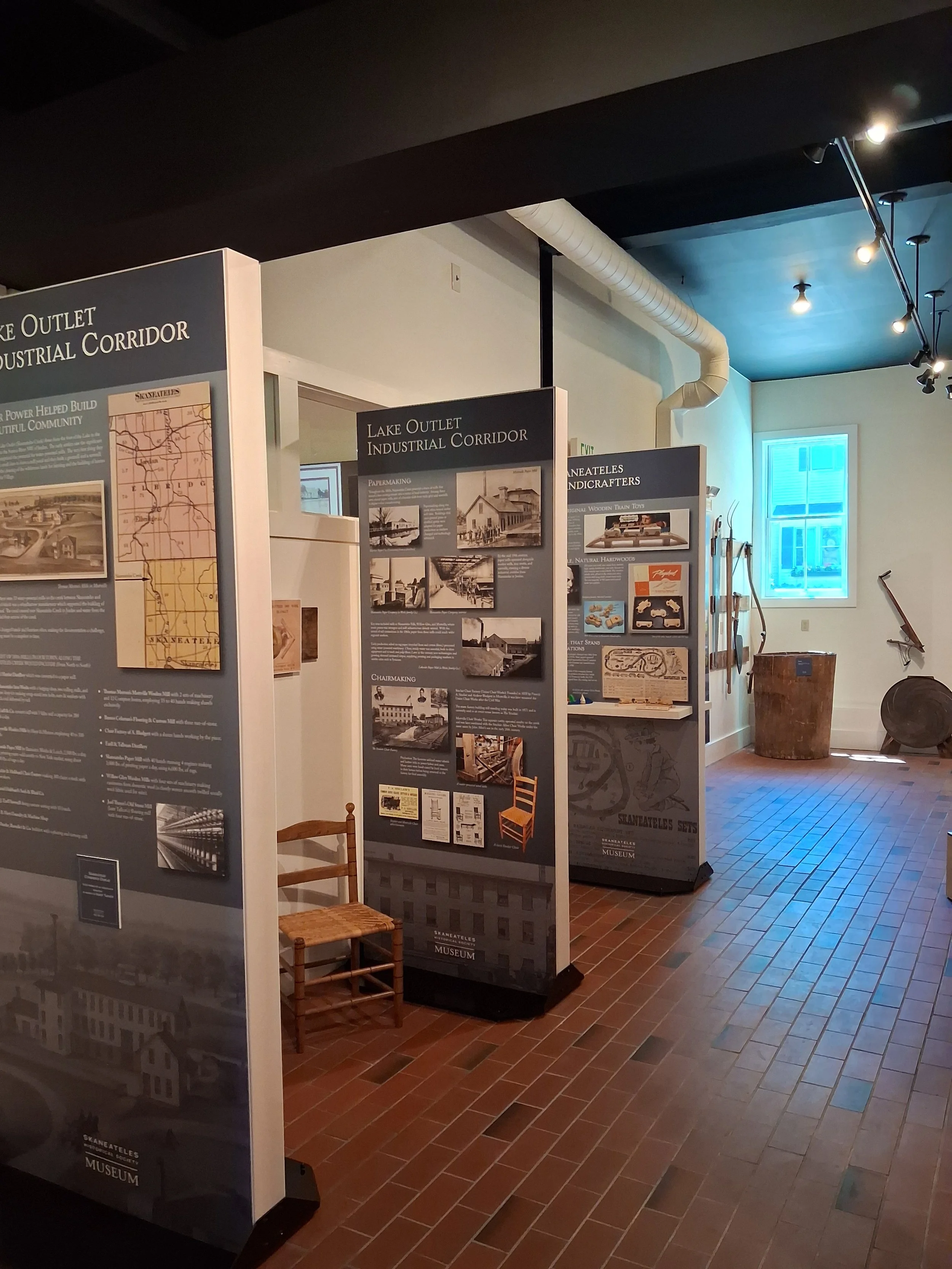
Explore the Newly Renovated Historical Wing
Step into the newly renovated Historical Wing at the Skaneateles Historical Society and discover the people, places, and defining moments that shaped the Village and Town of Skaneateles. Thoughtfully redesigned to provide a more engaging and informative visitor experience, the new space presents local history through professionally curated displays, carefully preserved artifacts, historic photographs, and compelling stories.
Each exhibit has been developed with close attention to historical accuracy, visual presentation, and accessibility—creating a polished, museum-quality environment that allows visitors to explore Skaneateles’ past in a meaningful and memorable way. From the community’s earliest years to the traditions, industries, and individuals that helped shape its identity, the Historical Wing offers a fresh perspective on the rich heritage of this remarkable Finger Lakes community.
Whether you are a lifelong resident, a history enthusiast, or visiting Skaneateles for the first time, the newly renovated Historical Wing invites you to experience local history through exhibits that are as informative as they are visually engaging.
-
Rescued
Nelson and Edward Bowdish, father and son, came to Skaneateles in 1876 and soon after were building boats – rowboats, skiffs and canoes – beginning an era here that would last until 1965. Following Bowdish, were the Skaneateles Boat and Canoe Co., Skaneateles Boats, Inc. and the Edson Boat Co. in nearby Mottville.
Skaneateles made history in 1938 when the first Lightning sailboat took its inaugural sail here, and again in 1945 when the first Rhodes Bantam was launched.
Thousands of boats, thousands of people have sailed, fished, played and earned a livelihood on these waters. The Museum is dedicated to keeping their memory and spirit alive.
Designed at the request of the Barnes brothers, of Skaneateles Boats Co., by Olin Stephens, this boat (below) began one of the most successful class of sailboats worldwide. Built in 1938, Lightning #1 exceeded all expectations and was the first of more than 1500 wood boats built in Skaneateles. Today there are more than 300 fleets around the world sailing some of the more than 16,000 Lightnings that were built by many firms and individuals.
Sailing on Skaneateles Lake

Nelson and Edward Bowdish, father and son, came to Skaneateles in 1876 and soon after were building boats – rowboats, skiffs and canoes – beginning an era here that would last until 1965. Following Bowdish, were the Skaneateles Boat and Canoe Co., Skaneateles Boats, Inc. and the Edson Boat Co. in nearby Mottville.
Skaneateles made history in 1938 when the first Lightning sailboat took its inaugural sail here, and again in 1945 when the first Rhodes Bantam was launched.
Thousands of boats, thousands of people have sailed, fished, played, and earned a livelihood on these waters. The Museum is dedicated to keeping their memory and spirit alive.
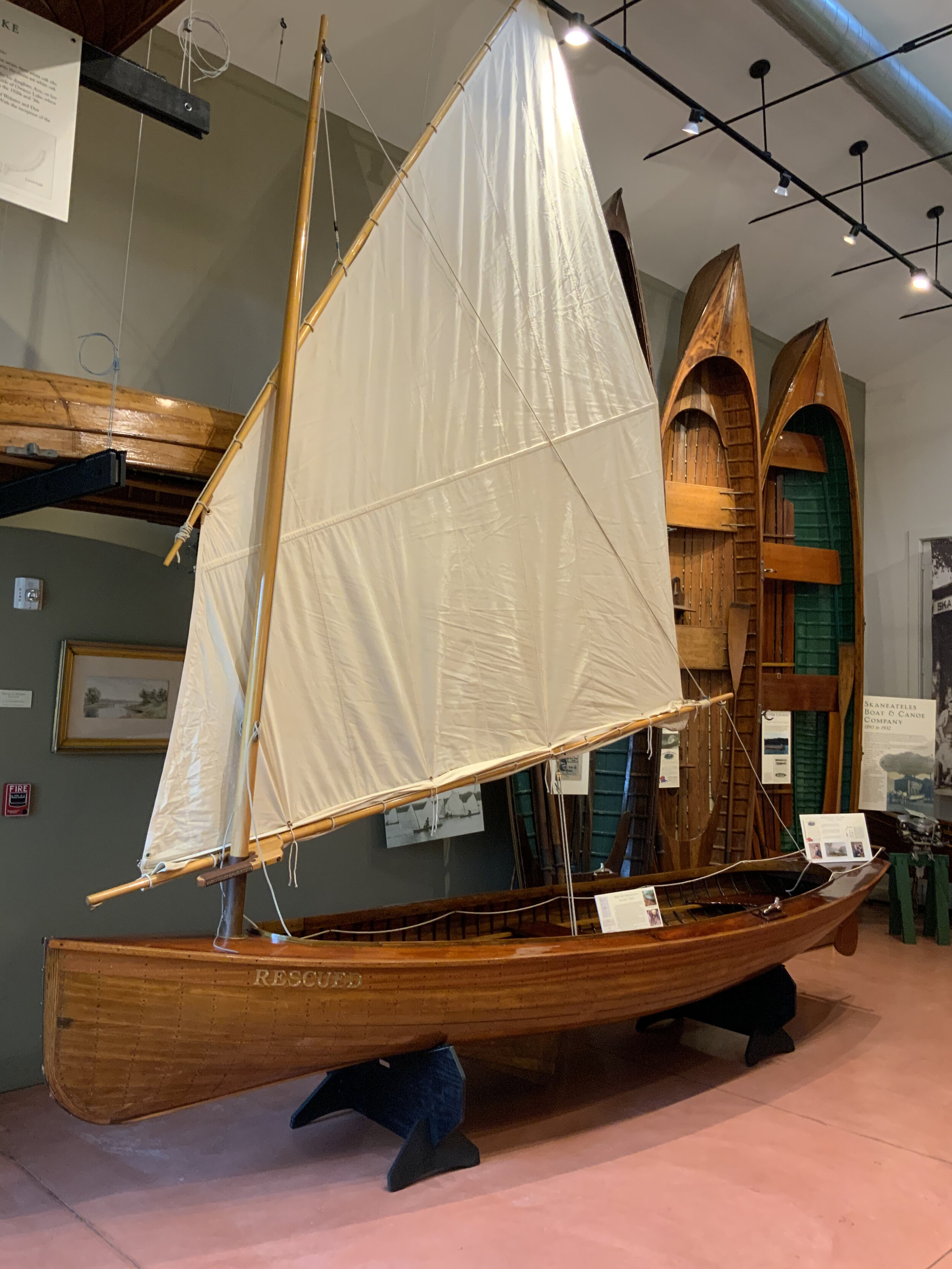
The 1881 Bowdish & Co,. the “Rescued”, is our latest acquisition for our artisan boat collection.
Packwood Carriage Works
The Packwood Carriage Works was across Genesee St. from Lamb's Hotel (now the Sherwood Inn). During the 1871 construction, the paper said: "When completed, it will be both an ornament to our village and amply supply the needs of the traveling public." Our carriage was built in the 1860s for Phebe Griffin Slade, and it remained in that family for 45 years until her death, when it was left to Gullelma Thorne and eventually to John Waller Thorne whose family donated the carriage to us.
Special thanks to John Waller Thorne, donor of the carriage, and Phebe Griffin Slade Sampson, original owner.
From a Factory to a Park
The demand for carriages declined in the 1880s, and John Packwood closed the business in 1886, and sometime thereafter, the works were destroyed. John D. Barrow was instrumental in the village's acquiring this property to expand Clift Park by 1910 an attractive place for visitors and residents to enjoy our beautiful lakeshore.
EXHIBIT UNDER CONSTRUCTION FOR RENOVATION AT THE MOMENT AND UNAVAILABLE TO THE PUBLIC
Carriages

John Packwood

The Packwood Carriage Works
Coachbuilders of the Region
John Packwood, was the third important carriage maker in Skaneateles after the Hall Brothers and John Legg. He came here from Auburn and in the 1840s apprenticed to John Legg in his business as a carriage blacksmith. By 1855, he was in carriage manufacturing with William Stacey on Fennell St. After Stacey retired and a partnership with a Mr. Worden from the former Legg shop ended, John Packwoodpurchased a site on the lakeshore across from Col. Alford Lamb's National Hotel in 1865.
He moved into the three-story brick building in 1866, employing up to 50 skilled craftsmen building carriages, wagons and sleighs that were highly regarded selling nation-wide, and occasionally world-wide. Having purchased Col. Lamb's hotel in 1865, Packwood completely refurbished the existing building and added the east wing in 1871. He sold it in 1874, but for the next 50 years it was known as the Packwood House.